

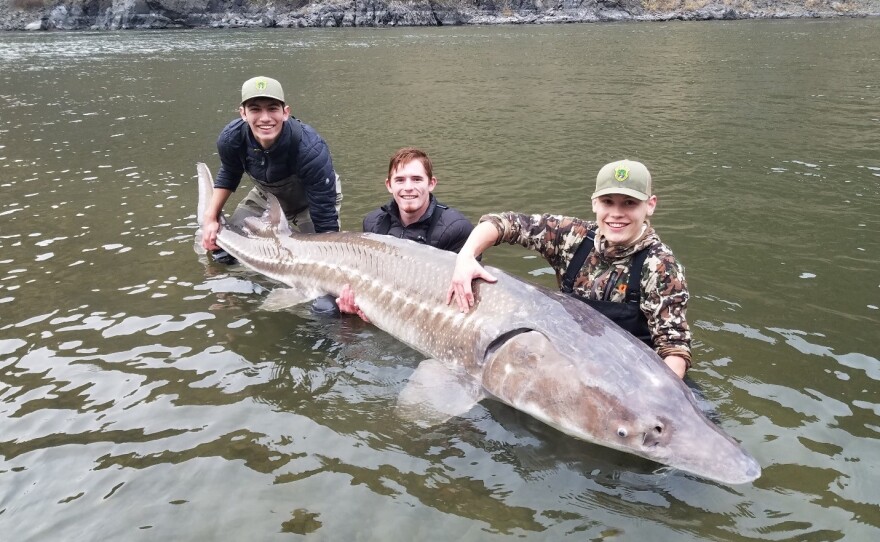
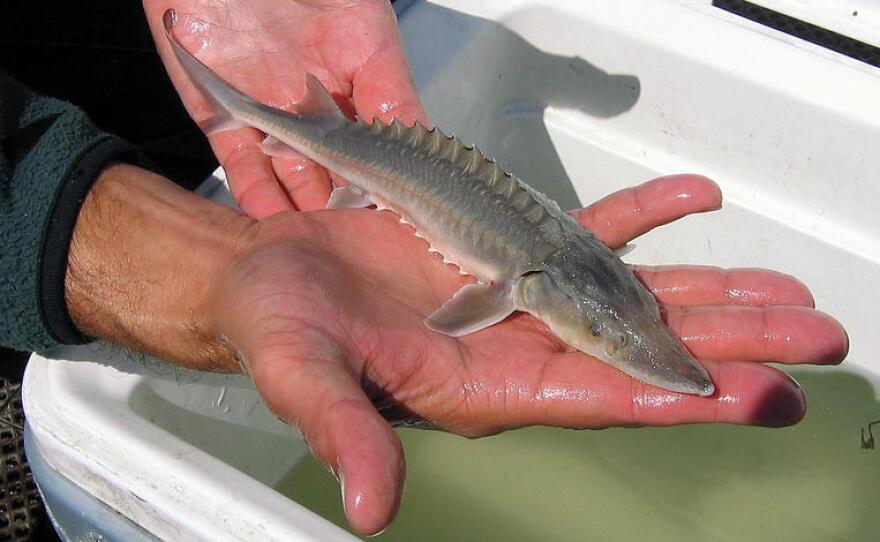
White sturgeon — a species that can grow longer than a pickup truck and live for decades — will be stocked in two Utah reservoirs next spring.
“They're kind of this torpedo-shaped, long, cylindrical, cool-looking species," said Trina Hendrick, the Division of Wildlife Resources cold-water sport fish coordinator. "They're often kind of talked about as looking and being prehistoric.”
White sturgeon come from humble beginnings, she said, even though they can live in excess of a century, growing longer than ten feet. The state agency will introduce the fish, much smaller than that, in Grantsville and Hobbs Reservoir next spring.
“They might be a young of year, they might be an age 1 fish," Hendrick said.
This makes transporting the dinosaur-like fish easier and more affordable for the state. But why introduce sturgeon to Utah in the first place? Utah, in fact, is not even close to the fish’s historical range.
Hendrick said that changing times require changing solutions.
“We know that we've got waters, especially at the mid elevations, that are warming, and so we can't stock salmonids in a lot of these locations, so we have expanded to warm and cool water species.”
Salmonids include, as you might expect, salmon, but also species like rainbow, brown, and cutthroat trout. All of these fish require cool, clean water, to live and reproduce. Increased drought intensity and agriculture pressure is putting stress on salmonids.
That’s where the warm tolerant sturgeon come in. They may take the place of other, more common, sportfish.
“The opportunity to fish for them and catch them, it's not going to be a trophy opportunity, but it's just a unique experience, and it's kind of cool in these locations that are considered community ponds," Hendrick said.
Importantly, Hendrick said the agency carefully selected the stocking locations of sturgeon to minimize impact on native fish.
“These are dead-end reservoirs," she explained. "We don't want them getting into like a riverine environment where the native species are really dependent upon the resources in that environment.”
The agency will release 100 sturgeon next spring: 50 in Grantsville Reservoir and 50 in Hobbs Reservoir. Hendrick said a catch and release order will be in place in an effort to support sturgeon population growth.
While these sturgeon won’t start out as the 12-foot behemoths you might think of when you picture a white sturgeon, Hendrick said it is a first step.
It’s a creative solution to increase fish diversity and angler experience for two important community fisheries in Utah.


