-
 Brent Cook, a geologist with experience in 70 countries, discusses his career and insights with StoryCorps in Springdale, Utah.
 -
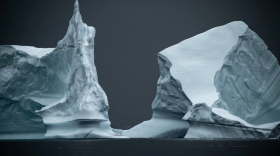 A Utah State University laboratory helped uncover the age of an ancient, ice-free Greenland landscape. The research is now featured in an Emmy Award-winning documentary.
 -
 A geologist, a planetary scientist, a NASA mission leader, and an expert on team-building walk into a bar. The bartender says, “hey, Lindy, are you drinking alone today?” In this episode, we talk about what it takes to be a polymath, and why it can be such a joy.
 -
 Jani Radebaugh, a planetary scientist at Brigham Young University, has spent her career studying the landscapes of other worlds — and for decades, that work has depended on images and data sent back by robotic missions. Now, as humans re-enter deep space, she’s asking a different question: What changes when we see these worlds with our own eyes?
 -
 A University of Utah seismologist applies his skill set to studying saguaro cacti in Arizona.
 -
 27 trillion cubic feet of natural gas is nearly the same amount the U.S. consumes in a year. But extracting it is another story.
 -
 The geology of Southeastern Utah includes many famous formations. In addition to their beauty, to the trained eye, they also include the history of eras and extinctions.
 -
 The porous landscape makes it difficult to predict how much water makes it to mountain rivers and valley groundwater.
 -
 Utah State University geologist Susanne Jänecke discussed Cache Valley’s ancient floods and earthquakes at this month’s Science Unwrapped series at USU. Hear those there tell their experience of the night in their own words.
 -
 Utah State University geologists say Australia’s K’gari Island formed during a time of rapid glacier melting, a process that eventually led to the formation of one of the world’s natural wonders: the Great Barrier Reef.

© 2026 Utah Public Radio

Play Live Radio
Next Up:
0:00
0:00
Available On Air Stations


