

Utah Public Radio published this article in collaboration with The Signpost as part of its election coverage.
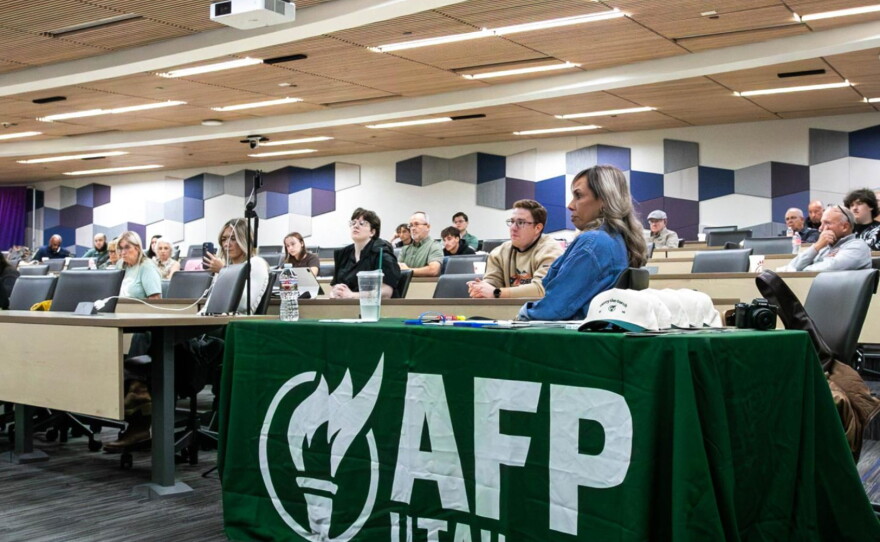
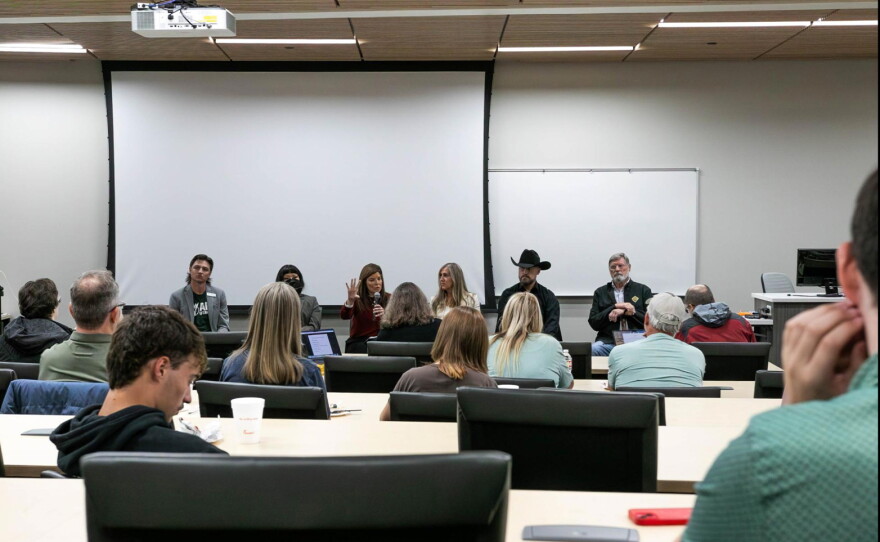
The Weber State Walker Institute partnered with Americans for Prosperity Utah to host a discussion on Utah data center projects. The forum ran from 6–7 p.m. at Lindquist Hall at Weber State University.
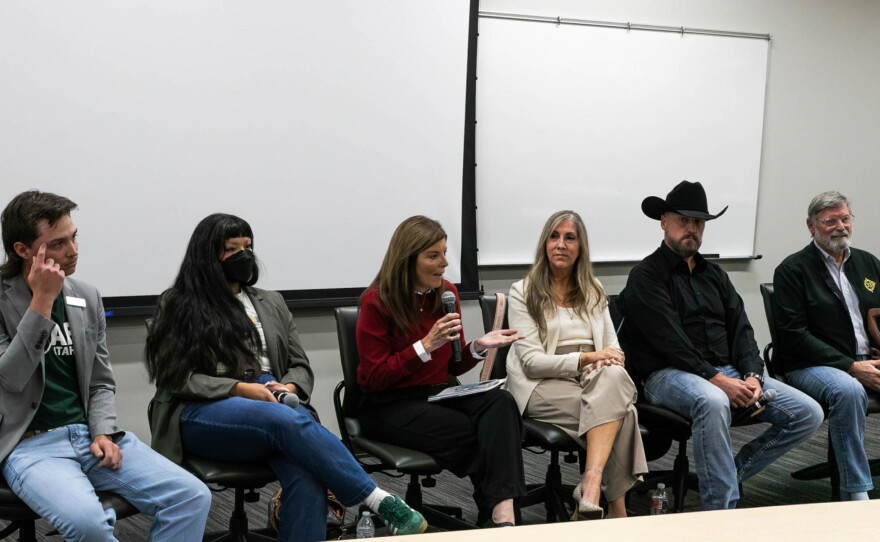
Forum speakers included William Olson, Uriah Kennedy, Ingrid Bettridge, Debbie Dujanovic, Kaile Akina and Tyson Reese, who offered differing perspectives on data center development.
Speakers agreed that public transparency was crucial and that individuals should remain informed and participate in lawmaking processes.
Some attendees said the panel leaned heavily in favor of data centers and left many of their concerns unaddressed.
“It is good to see the opposing side,” said Farrah Pliley, a member of the Box Elder Accountability Referendum (BEAR). “I don’t believe a word that any of the opposing side says because I live, eat, and breathe this, but it’s good to hear what’s out there.”
Alan Williams, another BEAR member who attended the forum, expressed similar concerns.
“Well, I think this panel was great except for the fact that it was biased, and I was expecting a balanced pro and con about it,” Williams said.
Attendees were also unhappy with what they described as suggestions that Chinese and Russian propaganda was fueling anti–data center sentiments, a topic brought up by speakers Uriah Kennedy and Ingrid Bettridge, who co-host the podcast “God and Country.”
“That’s not the case. We put a lot of thought and research into it,” former Ogden City council member Amy Wick said. “And, you know, we’re not listening to Chinese or Russian propaganda.”
Water use was among the concerns raised about data center development, but Wick was disappointed with the lack of discussion surrounding the Great Salt Lake during the panel.
“That is, I think, the biggest issue facing the Wasatch, Northern Utah,” Wick said, “and there was hardly any discussion of it.”
Wick also disagreed with the comment made by William Olson, founder of Weber County Conservatives, who said, “The question isn’t how much water it uses, it’s what kind of water is it using and does that create a scarcity for the population?”
According to the Utah Foundation, Utah water is classified into different types based on its use and treatment. Culinary, potable and domestic water is treated for human consumption, while secondary water is untreated and generally used outdoors.
“Just because some water’s treated and some is not,” Wick said, “doesn’t mean that water’s really any different when it comes to available water in the Great Salt Lake Basin.”


