-
 In other news, Utah is offering farmers and ranchers "unprecedented" loan relief after a disaster-filled year. And, Glen Canyon National Recreation Area is getting lower-elevation boat ramps.
 -
That means the fire has been completely surrounded and is unlikely to grow larger. In other news, Lake Powell's ferry could close for good after years of issues with low water levels.
-
 The reservoir, which straddles the Arizona-Nevada border, has suffered due to an imbalance between supply and demand for Colorado River water.
 -
 Lake Powell and Lake Mead store water from the Colorado River that's used by millions. The combined amount of water in both reservoirs is currently the lowest it has been in nearly 70 years.
 -
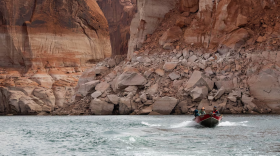 Salt Lake Tribune reporters Palak Jayswal and Brooke Larsen talk about Utah's top stories, including plastic surgery trends and the return of Glen Canyon’s once lush ecosystem as Lake Powell drops.
 -
 Federal data typically focuses on the total amount of water stored, but some water has to stay in reservoirs to keep dams working. That means even less is available for cities and farms.
 -
 Southern Utah Tribune reporters Mark Eddington and Brooke Larsen joined UPR for a live broadcast in St. George. They talk about the top stories in southern Utah, including the Colorado River.
 -
 Lake Powell, the upper Colorado River basin's largest reservoir, is projected to have its lowest summer inflow in its history this summer. Federal agencies have taken emergency measures to prop it up.
 -
 Widespread drought and fears of a power crisis forced the Interior Department to start sending billions of gallons of water from Flaming Gorge Reservoir in Colorado downstream to prop up Lake Powell.
 -
In other news, the Provo City Council unanimously voted against a rezoning request for an AI data center. And, harmful algal blooms were found in Lake Powell.

© 2026 Utah Public Radio

Play Live Radio
Next Up:
0:00
0:00
Available On Air Stations


